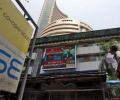
Intense volatility remained amid a global selloff led by concerns over the impact China's coronavirus on world economies, analysts said. Market participants are also jittery ahead of January derivatives expiry this week, they added.

The MoUs were signed on Monday under the 'Magnetic Maharashtra 2.0', hours before the violent face-off between Indian and Chinese troops in the Galwan Valley in Ladakh, in which 20 Indian Army personnel were martyred.

A large number of Koreans trace their ancestry to this legendary princess, who is known as Queen Heo Hwang-ok.

In the Sensex pack, Bajaj Finance and Bajaj Auto ended up to 6.09 per cent higher after posting strong quarterly numbers.

Among major Sensex movers, Ultratech Cement rose over 4 per cent, Bajaj Finance by 2.63 per cent and Maruti by 2 per cent. BSE Sensex closed up by 133.14 points at a record high of 47,746.22. NSE Nifty rose by 49.35 points at its lifetime high of 13,981.95.

Indian economist Kalpana Kochhar, who heads the Human Resources Department of the International Monetary Fund, is leaving the organisation to join the Bill and Melinda Gates Foundation, the IMF announced on Wednesday. Kochhar, who served in various senior positions during her three decades at the IMF, will retire on July 30, it said.

Bajaj Finance was the biggest gainer in the Sensex pack, spurting 3.64 per cent. Tata Motors, Infosys, Vedanta, ONGC, PowerGrid, NPTC, Axis Bank, ICICI Bank, Kotak Bank, SBI, HDFC Bank, Tata Steel, TCS and RIL too rose up to 3.48 per cent.

India saw growth of around 213 per cent in the number of real-time payments processed over the past year.

There have been at least 1,641 cases of the virus in the Gulf region. Dubai has postponed its March boat show until November and Abu Dhabi postponed the ITU World Triathlon event this month, after earlier cancelling a cycling event in which two riders were diagnosed with the virus.

Bajaj Finance was the top loser in the Sensex pack, tanking over 10 per cent, followed by Axis Bank, Maruti, M&M, Tech Mahindra and ONGC. The gainers included ITC, Bharti Airtel, Kotak Bank and Hero MotoCorp.

NSE Nifty finished higher by 46.05 points, or 0.39 per cent, at 11,707.90. Asian Paints was the top gainer in the Sensex pack, rallying 6.32 per cent, followed by Nestle India, HUL, Bajaj Auto, IndusInd Bank, Tata Steel, Maruti and PowerGrid.

The number of Indians over 15 either working or looking for work is lower as a percentage than in the United States, China, Bangladesh or Pakistan, points out Aakar Patel.
ONGC was the top laggard in the Sensex pack, dropping 5.80 per cent, followed by PowerGrid, HCL Tech, TCS, Tata Steel and Reliance Industries.

Gold, which was hovering around $1,321 an ounce in January 2019, has already breached $1,600 per ounce in the past few sessions to a seven-year high.


Moon Jae-in's visit will play a crucial role in exploring complementarities between India's Act East policy and South Korea's New Southern policy, says Dr Rahul Mishra.

The fall was led by banking stocks, with IndusInd Bank, Kotak Bank, Federal Bank, Axis Bank, ICICI Bank, HDFC Bank and SBI declining up to 2.36 per cent.

Foreign portfolio investors (FPI) have pumped in a net sum of Rs 49,553 crore in Indian markets this month so far on back of high liquidity coupled with improving global indicators and clarity after the US presidential elections. FPIs invested Rs 44,378 crore in equities and Rs 5,175 crore in the debt segment, taking the total net investment to Rs 49,553 crore between November 3-20. In October, FPIs invested a net sum of Rs 22,033 crore.

Park is charged with one count of conspiracy to commit computer fraud and abuse and one count of conspiracy to commit wire fraud.

Eight images that prove it's a wonderfully bizarre world.

The Uttar Pradesh Defence corridor is estimated to attract Rs 20,000 crore investment and create 250,000 jobs.

Since October, FPIs have sold over $26 billion worth of stocks, which is the largest selling ever seen in India, observes Akash Prakash.

Chung is being touted as the next Djokovic because of his relentless defensive skills.

Top losers in the Sensex pack included TCS, Yes Bank, ITC, Sun Pharma, Reliance, Coal India, Asian Paints, SBI, Maruti, HUL, HCL Tech and ICICI Bank, falling up to 2.91 per cent.
A senior CBI official said Adani group is alleged to have 'over-invoiced' its loans to the tune of Rs 2,300 crore (Rs 23 billion) between 2011 and 2013.

The biggest gainers in the Sensex pack were Sun Pharma, Bajaj Finance, Vedanta, Yes Bank, ICICI Bank, HDFC, Tata Motors, HCL Tech, IndusInd Bank and Axis Bank, rising up to 2.98 per cent.

In July alone, 2.5 tonnes of gold coins were imported so far from South Korea under zero-duty facility

RTGS is used to transfer large sums, the minimum amount being Rs 2 lakh. This mode is used primarily to facilitate trade and market transactions. The primary beneficiary would be the capital markets.

'Allocate some parts of one's surplus income towards cryptocurrencies, considering the immense growth potential of this emerging asset class.'

In the Sensex pack, Yes Bank, IndusInd Bank, Infosys, ICICI Bank, TCS, SBI, Reliance Industries, ONGC, Axis Bank and NTPC rose up to 2.66 per cent.

Waves of foreign portfolio investments worth over Rs 51,000 crore splashed into the Indian market in 2021 as overseas investors turned net buyers of domestic securities for the third straight year while excess global liquidity and other factors steered the ebb and flow of their investing ways. With the global financial system still flush with liquidity, emerging market assets, especially equities, might well remain the preferred investment avenue for many more months to come, experts opined. As the equities sizzled during most of 2021, that also saw economy slowly coming back into the recovery path, Foreign Portfolio Investors (FPIs) turned net buyers but their investment is much less compared to net inflows of Rs 1.03 lakh crore in 2020.

Inspiring moments from the 2018 Pyeongchang Paralympic Winter Games


Not just India, but Asian peers such as Indonesia, South Korea, Thailand, Taiwan and The Philippines have seen sharp FPI outflows this year

Top losers in the session included Maruti, Tata Motors, RIL, Yes Bank, Adani Ports, Bharti Airtel, Asian Paints, ONGC, HUL, Kotak Bank, IndusInd Bank and Axis Bank, falling up to 5 per cent.

Yes Bank, Wipro, Kotak Bank, M&M, Sun Pharma, Maruti, HDFC, Hero MotoCorp, Infosys, TCS, L&T, Bajaj Auto and HUL were among the top gainers, rising up to 6 per cent.

Combined net profit of BSE500 companies at $ 63 bn is 2.3% of GDP; global average is 5%.

With its political colour dominated by less than democratic trends, BRICS currently leaves some of us wondering -- where in this grouping is there an assurance that human freedom will be respected unconditionally? It would be nice to see the new members of BRICS drawn from the ranks of countries wedded to preserving and guarding human freedom, observes Shyam G Menon.

Hydrography (underwater geography) prevents the Indian Navy for opting for an all-conventional, or all-nuclear submarine fleet.

The biggest losers of the session include Reliance, Infosys, TCS, ICICI Bank, HDFC twins, ITC, Maruti, L&T, HUL, Axis Bank, Wipro and IndusInd Bank, cracking up to 4 per cent.
 © 2026 Rediff.com - Advertise with us - Disclaimer - Privacy Policy - Sitemap - Feedback - About us - Terms of use - Grievances